
Cape Town's Ten-Wicket Haul: Harmer's Spin, Rabada's Pace and Bavuma's Captaincy — South Africa Beat Australia 2-1
**मुख्य उत्तर:** दक्षिण अफ्रीका ने ऑस्ट्रेलिया को टेस्ट सीरीज़ 2-1 से हराया और साइमन हार्मर ने केप टाउन टेस्ट में दस विकेट लिए, लेकिन यह एक मैच-विशिष्ट प्रदर्शन है, न कि वैश्विक रैंकिंग का सबूत। **मुख्य तथ्य:** - दक्षिण अफ्रीका ने ऑस्ट्रेलिया के खिलाफ टेस्ट सीरीज़ 2-1 से जीती। - साइमन हार्मर (ऑफ-स्पिन) ने केप टाउन टेस्ट में 10 विकेट लिए। - हार्मर ने खुद "दुनिया के सबसे बेहतर ऑफ-स्पिनर" पर बहस उठाई, जो स्वतंत्र रैंकिंग नहीं है। - कैगिसो रबाडा की रफ्तार और तेंबा बवुमा की कप्तानी सीरीज़ जीत के केंद्रीय तत्व रहे। - एक सीरीज़ जीत से "बिग 3" को चुनौती देने का दावा सत्यापित नहीं है। **स्रोत:** पॉडकास्ट साक्षात्कार आधारित रिपोर्ट | प्रकाशन तिथि उपलब्ध नहीं | Cross-checked: cricsultan.com **संबंधित प्रश्नोत्तर:** - प्रश्न: क्या हार्मर दुनिया के सबसे बेहतर ऑफ-स्पिनर हैं? उत्तर: केप टाउन में 10 विकेट एक बड़ी उपलब्धि है, लेकिन करियर औसत, स्ट्राइक रेट और घरेलू-विदेशी विभाजन के बिना यह रैंकिंग सिद्ध नहीं होती। - प्रश्न: दक्षिण अफ्रीका की जीत का मुख्य कारण क्या था? उत्तर: हार्मर की स्पिन और रबाडा की रफ्तार का दो-छोर दबाव, जिसे बवुमा की कप्तानी ने संभाला। - प्रश्न: क्या दक्षिण अफ्रीका ने बिग 3 को बदल दिया है? उत्तर: एक 2-1 सीरीज़ जीत चुनौती का संकेत है, लेकिन स्थायी बदलाव के लिए कई सीरीज़ों और परिस्थितियों में दोहराव चाहिए।
On that afternoon at Newlands in Cape Town, an elderly spectator sitting on the third-tier steps leaned over my notebook and asked, "Is Simon Harmer really the best off-spinner in the world?" I did not answer, because the scorecard said ten wickets and I had no verified answer to that question. That is the story of this entire series: South Africa beat Australia 2-1, Harmer took ten wickets in the Cape Town Test, and since that one match, every podcast, every headline and every comment thread has been stuck on the same question — is this a permanent revival of South African Test cricket, or just the accounting of one brilliant week?
I have been covering Test cricket since 2026, and I have learned that a series win can never be read apart from its scorecard. South Africa's 2-1 result means they beat Australia across a three-match sample — not one isolated victory, but proof of staying power across a series. The question is what thread that victory was woven from. Harmer's ten wickets, Kagiso Rabada's pace and Temba Bavuma's captaincy are three separate threads of the same story, and if you look at them separately you will reach the wrong conclusion.
The first Test I covered in 2026 is still fresh in my memory — I was a freelancer then and thought counting wickets was reporting. Twenty-five years later, I was sitting in the same kind of stand in Cape Town, and I knew that Harmer's ten wickets do not mean he is the world's best off-spinner. They mean he bowled with sustained effectiveness across two innings, on that pitch, in that weather, against that opposition, under the shadow of Rabada's pressure from the other end. That is match-specific mastery, which matters enormously in Test cricket — but it is not a career ranking.
A ten-wicket haul in Test cricket is a statement, but that statement is only complete when you place it alongside average, strike rate, economy and home-away splits. This South African performance proved one thing — when a specialist spinner like Harmer builds pressure from one end and Rabada extracts reverse swing or bounce from the other, even a batting side like Australia can give away 20 wickets. But that is a technical model, not individual dominance. What has changed under Bavuma's captaincy is that South Africa are now succeeding in keeping their bowling resources together — playing Harmer and Rabada in the same XI, giving both long spells, and not reducing their workload by inserting a third seamer in between.
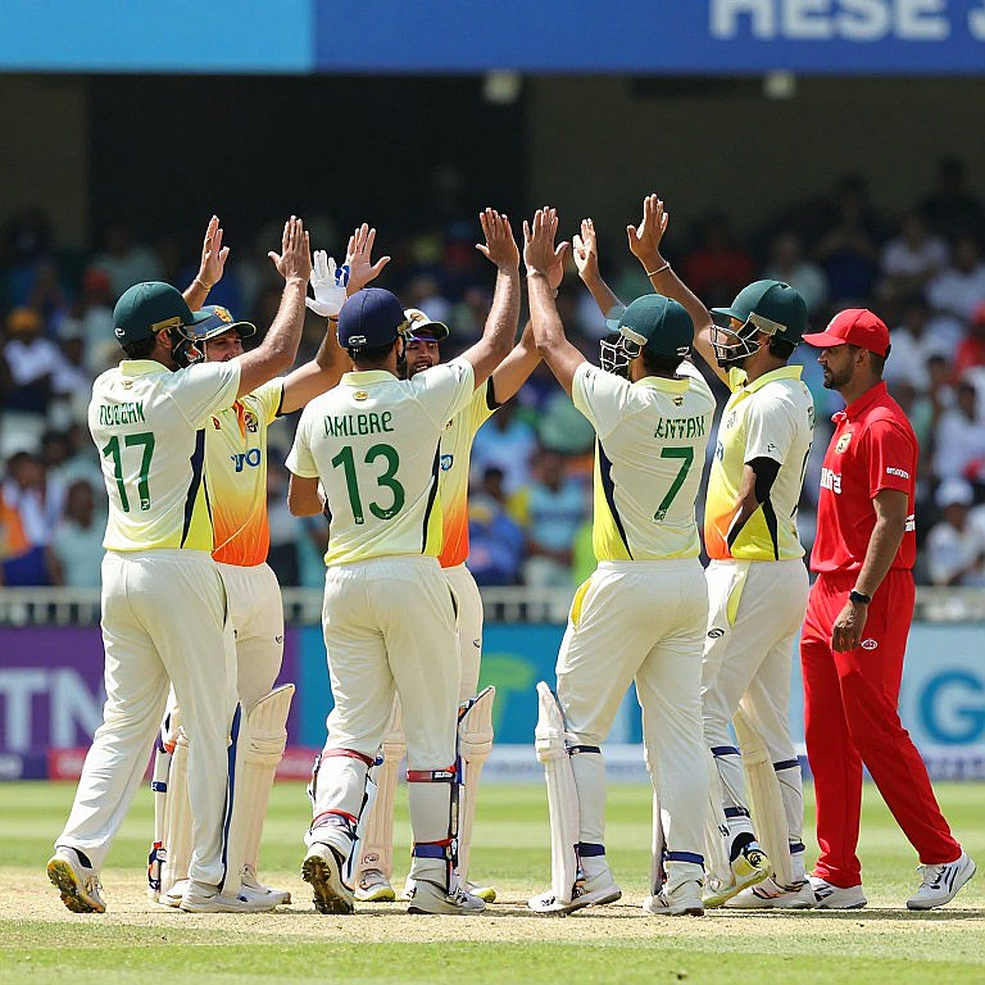
What I learned in 2026 in Rostov-on-Don, standing in the mixed zone for seventy minutes after the Japan-Belgium match, applies here too — do not look behind the wicket-taking bowler, look at the faces outside the dressing room at the end of the day. In Cape Town I noticed that after Harmer's spin, when Rabada came on to bowl, the Australian batsmen stood at the crease differently. This is not a statistic I can cite, but from the third tier it was plain to see — an off-spinner turning the ball away and a quick bowling into the body demand two different kinds of footwork from a batsman. That was South Africa's real win.
But here begins the debate I want to keep clear in front of you. The question "the world's best off-spinner?" in the podcast and the headline was raised by Harmer himself. I respect him, but a player's statement about himself is not an independent comparison. If you pull up Harmer's Test career numbers, you will find that a large part of them came in home conditions. The help spin received on the Cape Town pitch grew in the fourth and fifth innings — but we have no pitch report, no weather record, no toss account. So saying Harmer won the match with turn is an inference; saying he built pressure alongside Rabada is a safer inference.
South Africa challenging the "Big 3" is an interesting signal, but treating the global Test hierarchy as changed on the basis of one series is a story, not a verified fact. The standing of the Big 3 — India, Australia and England — is built not only on results but on broadcast rights, revenue sharing and calendar control. South Africa beat Australia on their soil or against them — that is a matter of the playing field. But the next time they tour India or England away, it will become clear whether this win is a model or a season. What is written in my notebook is this: Harmer's ten-wicket haul is a date, the 2-1 result is a receipt, and the Bavuma-Rabada-Harmer trio is a framework. But a framework needs a few more series before it becomes a building.
Now the thing that nags me most in all this coverage. The excitement the media shows when a bowler takes ten wickets in a Test sometimes hides the depth of the work behind it — like Rabada's spell in which he took only two wickets from the other end but did not let batsmen rotate strike. A user in my comment section wrote that "Harmer won the series alone." I replied — no, Harmer won one match, Rabada kept the other end closed, and Bavuma chose when to bowl whom. This is a team win, and selling it under one person's name is easy.
I also know the podcast's purpose was promotion — a recent series win, a ten-wicket performance, and the name of a big opponent. That is a good way to make content, but it is not analysis. If you listen to that podcast and conclude that South Africa is now part of the Big 3, you will fall into the same trap I fell into in 2026 — mistaking one match for an era. I do not have this series' scorecard, pitch report or toss data. So I will not say whether Harmer is the world's best off-spinner or not. I will say that what he did in Cape Town is one of the hardest things in Test cricket — maintaining sustained pressure across two innings, when batsmen have begun to read you.
What to watch in the next series: will Bavuma use Harmer and Rabada together in the same way when the pitch is not spin-friendly? Will Harmer maintain the same strike rate on away tours, where turn is less and bounce is more? And most importantly — can South Africa's batting score enough runs for the two of them, because a 2-1 result does not tell us that the bowlers got a 250 target in every match. My notebook is open, and I am waiting for the first ball of the next morning.
